There is only so much environmental science that can be learned in a classroom or science lab. Field experience is woven throughout
Lakeland College’s environmental sciences programs, with labs taking place in the
natural spaces on and around campus throughout the year. Each year, however, that
experience is intensified during Field Week.
There is only so much environmental science that can be learned in a classroom or science lab. Field experience is woven throughout
Lakeland College’s environmental sciences programs, with labs taking place in the
natural spaces on and around campus throughout the year. Each year, however, that
experience is intensified during Field Week.
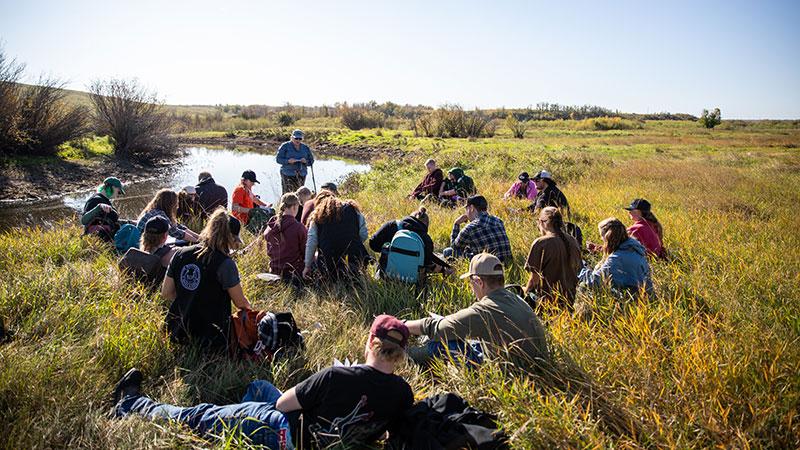
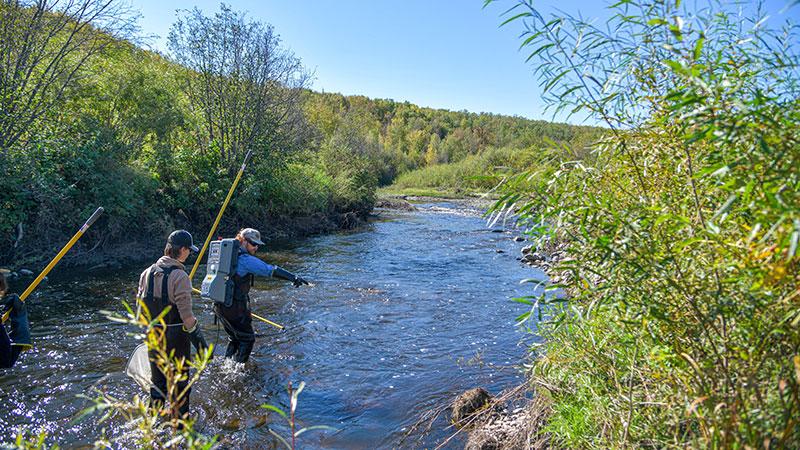
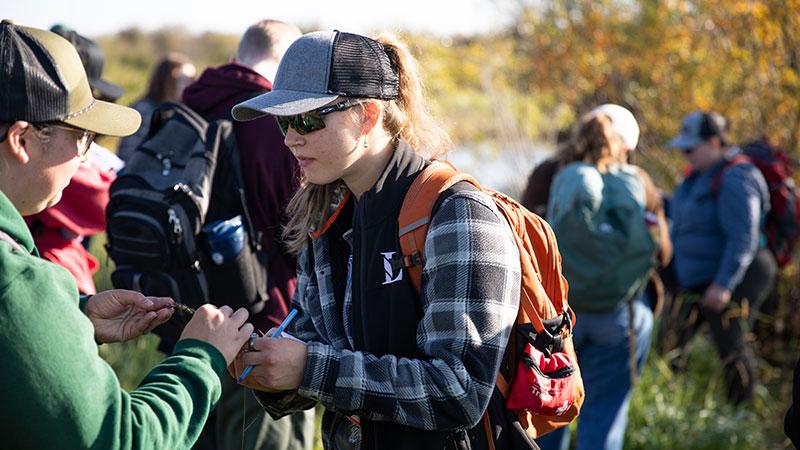
That’s when second-year environmental sciences students find themselves knee-deep in the river electrofishing, setting up and checking small mammal traps, deploying autonomous recording units, constructing bat houses, capturing, banding and releasing songbirds, reading soil profiles, touring mine sites and assessing wetlands.
“I love the hands-on experience,” says Mackenzie Hamm, a second-year environmental sciences student majoring in wildlife and fisheries conservation. “We’ve got to learn quite a few different things. It really brings into context what we’re learning in the classroom, so I can actually apply all of that theory that we’ve been doing.”
On a field trip to Elk Island Provincial Park, Hamm and her classmates learned that one of the bison had slipped its tracking collar. Together, they were able to track it through the brush and recover it.
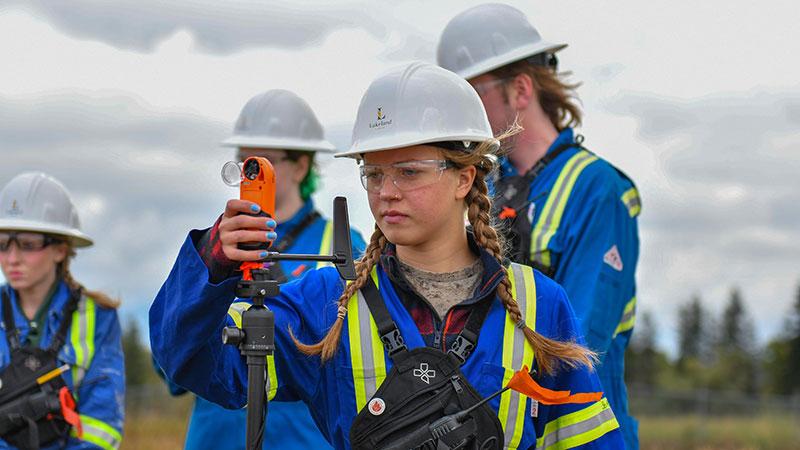
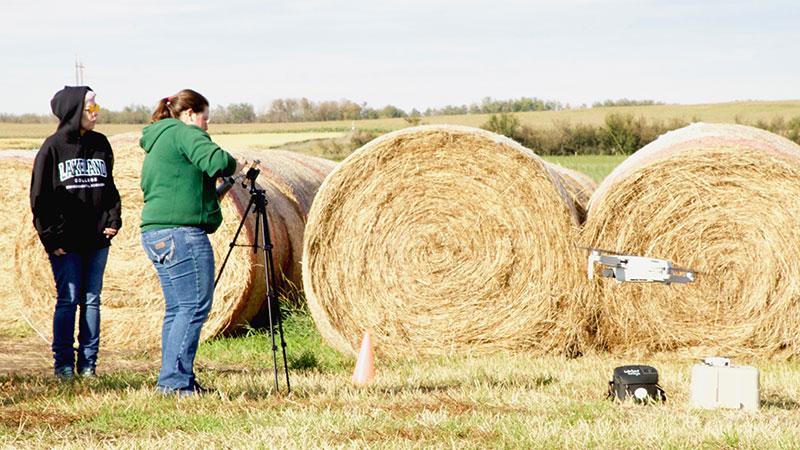
This year, first-year environmental sciences students enjoyed a taste of Field Week as well. For the first time, they were invited to participate in a day of the action, spending the morning learning skills in soils, GPS navigation and drones. In the afternoon, they put those skills to the test finding their way across the landscape using GPS units to complete stations in soils, plants, wildlife, drones and field preparedness.
Students in the bachelor of applied science: environmental management program weren’t left out of the Field Week fun. They travelled to Hinton for a few days of higher-level studies in the mountains.
By the end of Field Week, students at every level covered a lot of ground, both literally and academically, turning classroom theory into experience they can take with them into the field.
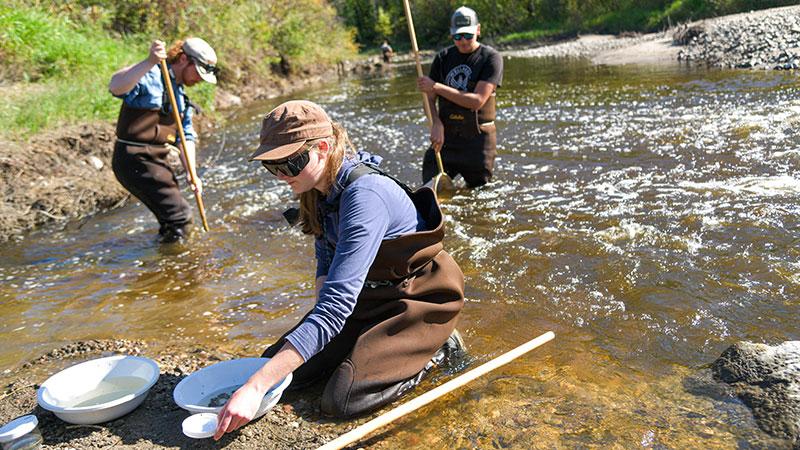
Photo: (top) Mackenzie Hamm captures aquatic insect specimens.